
Dental Handpiece Maintenance Equipment
The Dental Handpiece Maintenance Equipment series produced by BestMedical Manufacturer focuses on the cleaning, lubrication and performance guarantee of dental instruments, forming three core product lines that meet the daily maintenance needs of different-sized dental institutions, while also considering operational convenience and clinical safety. The products in this series include Dental handpiece cleaning and oiling machine, etc.
1. Intelligent Automatic Maintenance System
This series emphasizes efficient and standardized maintenance, covering multi-station handle cleaning and lubrication integrated machines, fully automatic oiling maintenance centers, etc. The equipment can complete processes such as internal pipeline rinsing, precise oiling, and airway drying with one click, suitable for all types of dental handles such as high-speed air turbines and low-speed electric motors. The equipment is equipped with pressure and time control systems to avoid human operational errors, significantly improving maintenance efficiency and suitable for batch processing needs of medium-sized dental hospitals and chain clinics. The system supports digital record and traceability, complies with medical disinfection standards, and extends the service life of the handles.
2. Portable Manual Maintenance Tools
Designed for small clinics, mobile diagnosis and emergency maintenance scenarios, it provides portable oiling guns, manual cleaning kits, handle-specific cleaning brush sets, etc. The tools are lightweight and easy to operate, do not require an external power source, and can quickly complete the cleaning and lubrication of a single handle. The kits are equipped with conversion heads and food-grade lubricating oil that are compatible with different interfaces, meeting daily scattered maintenance needs, and balancing cost and practicality, making them the basic essential tools for grassroots dental institutions.
3. Specialized Inspection and Repair Equipment
Focusing on performance diagnosis and fault troubleshooting of handles, including handle speed detection instruments, air tightness testers, bearing replacement tool kits, etc. The products can accurately detect potential problems such as handle speed attenuation and air seal leakage, assist technicians in quickly locating faults and completing component replacements, reducing maintenance waiting time, and ensuring the continuity of diagnosis and treatment. This series of equipment provides dental institutions with independent maintenance capabilities, reduces third-party maintenance costs, and enhances the autonomy of instrument management.
- View as
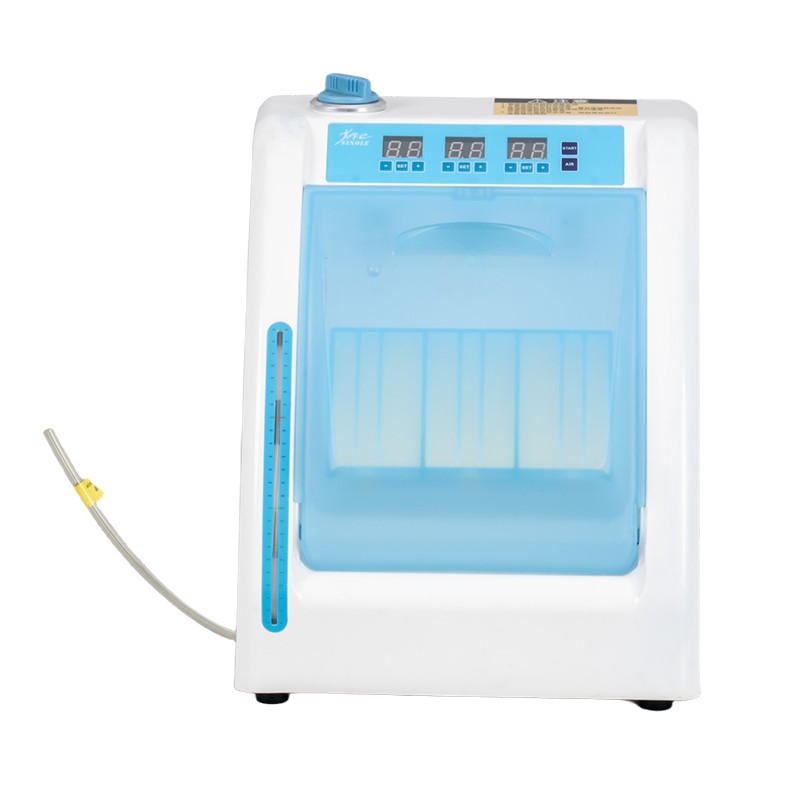
Dental handpiece cleaning and oiling machine
This Dental handpiece cleaning and oiling machine is a special handpiece maintenance equipment for dental clinics. It adopts a fully automatic cleaning + oiling integrated design. It can complete the entire process of cleaning, oiling and purging dental handpieces, extending the service life of the handpiece and reducing maintenance costs. It is supplied by BestMedical, a professional medical equipment manufacturer in China. It is in stock and is the core equipment for daily maintenance of dental handpieces.
As a reliable Dental Handpiece Maintenance Equipment manufacturer and supplier in China, we have custom options and volume discount pricing. Please just send us a quotation!