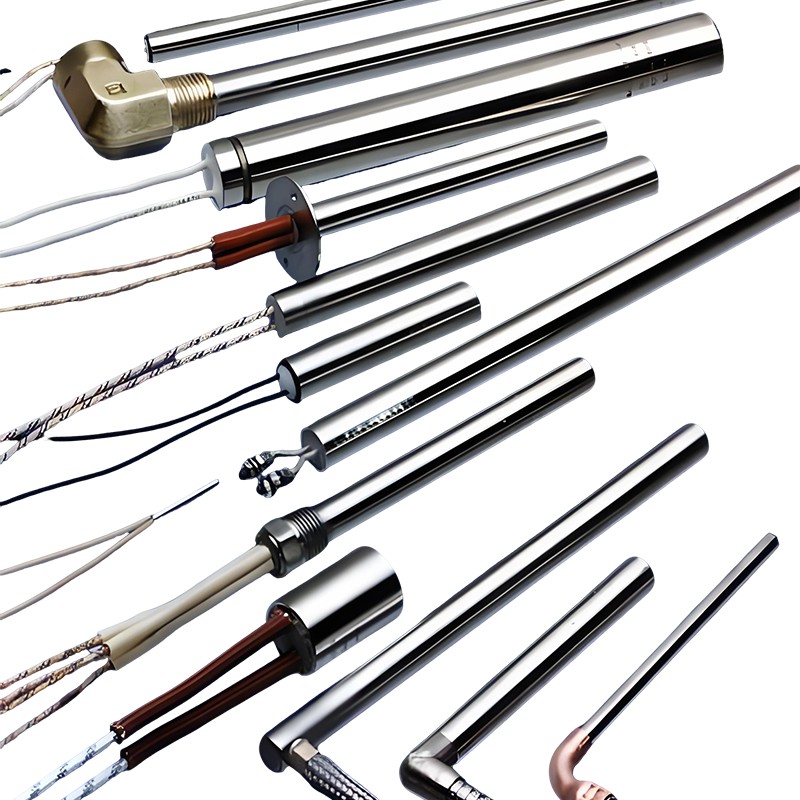
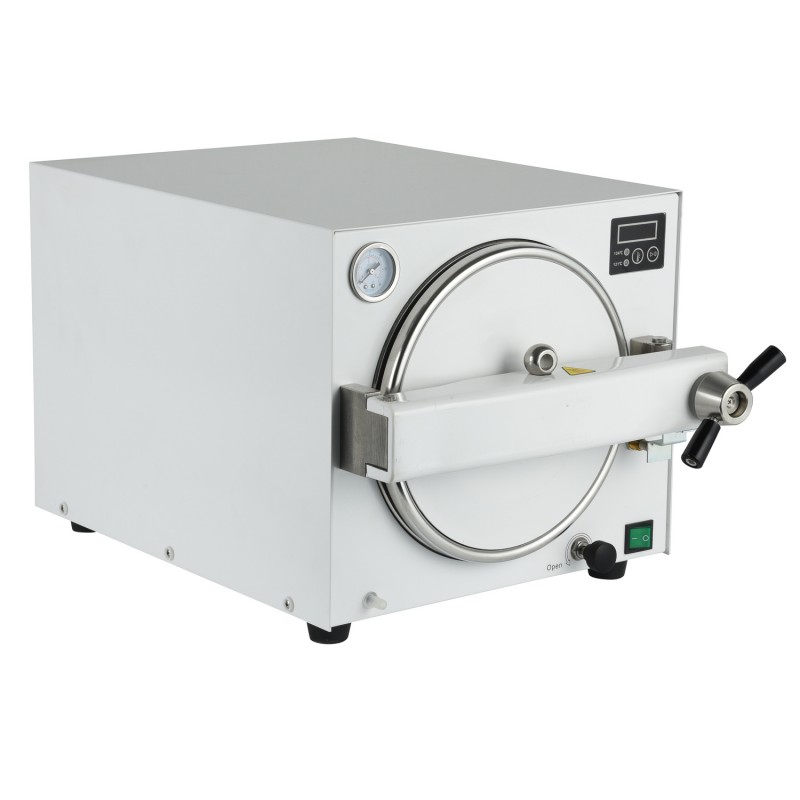
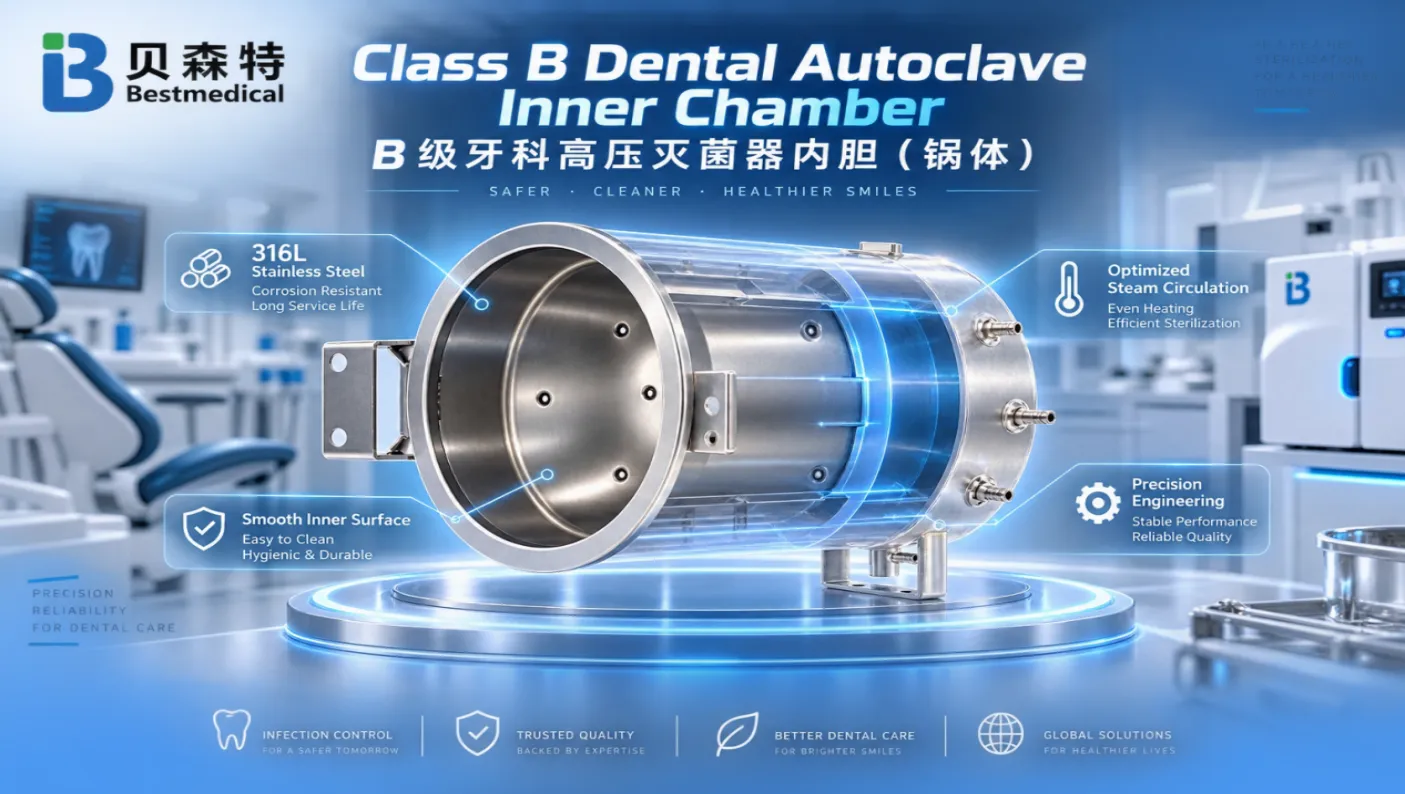
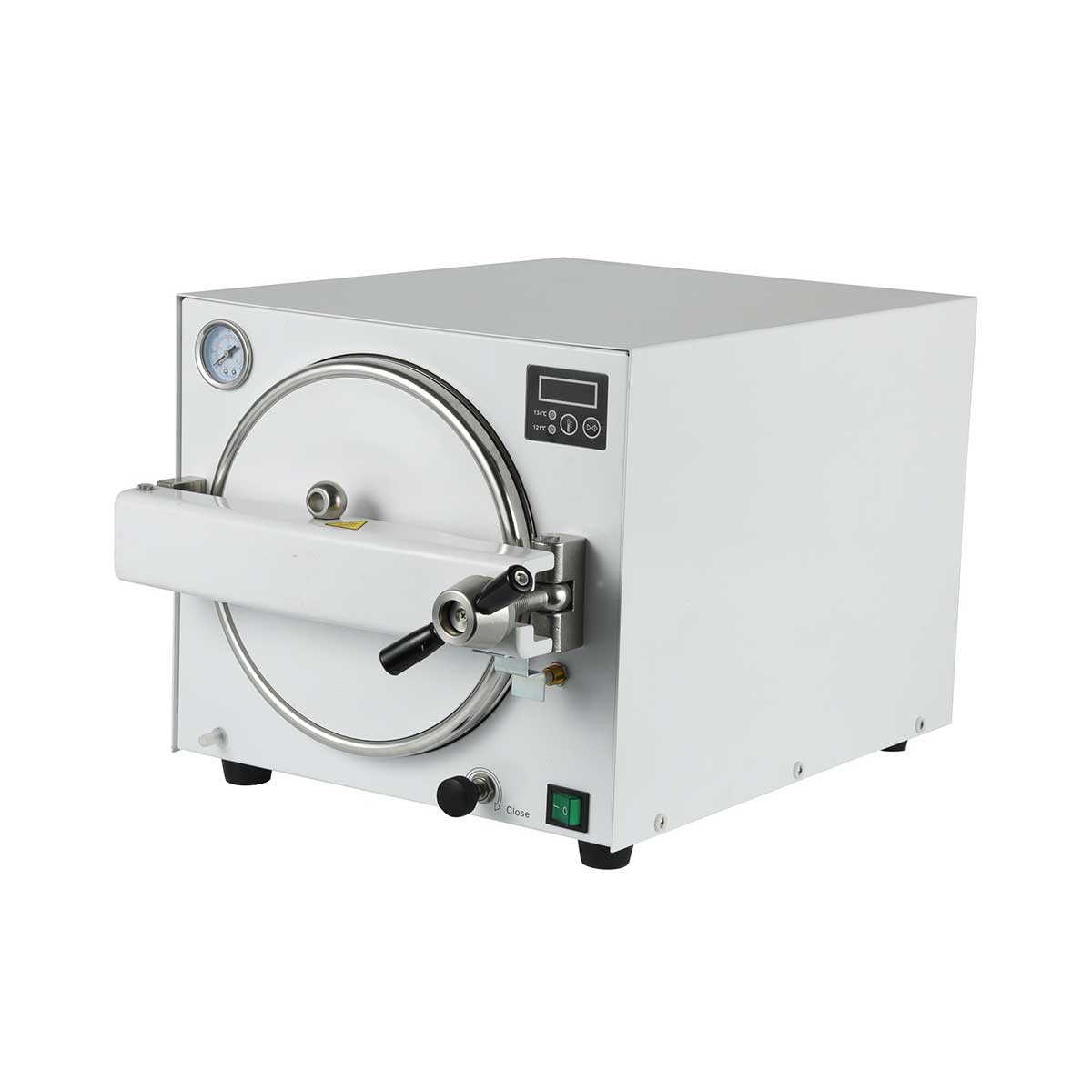
The most common sterilizer malfunctions in dental clinics include slow or no heating of the cavity, which may be due to scaling or aging of the heating tube. Regular descaling and resistance checks are required. Steam leakage is usually caused by aging door seals or foreign objects stuck. The sealing ring should be replaced quarterly and the sealing surface should be cleaned with a damp cloth. Incomplete drying can cause the equipment to become damp, often due to blockages in drainage pipes or decreased efficiency of vacuum pumps. It is necessary to clean the filter and check the vacuum oil level. After sterilization, the color change of the indicator tape is uneven, mostly due to obstructed steam penetration or excessive loading. The placement should be adjusted and the chamber should be cleaned.
Professional maintenance advice: Drain the condensation water in the chamber daily, clean the inlet filter screen weekly, and replace the air filter (if any) quarterly. Use deionized water or distilled water as the water source to avoid the formation of scale from minerals in tap water. It is recommended to sign an annual maintenance contract with the manufacturer and regularly inspect safety valves, pressure sensors, and control circuits. Operators must undergo training and are strictly prohibited from modifying safety devices or bypassing interlocking mechanisms without authorization to ensure the safety of doctors and patients.
We use cookies to offer you a better browsing experience, analyze site traffic and personalize content. By using this site, you agree to our use of cookies. Privacy Policy